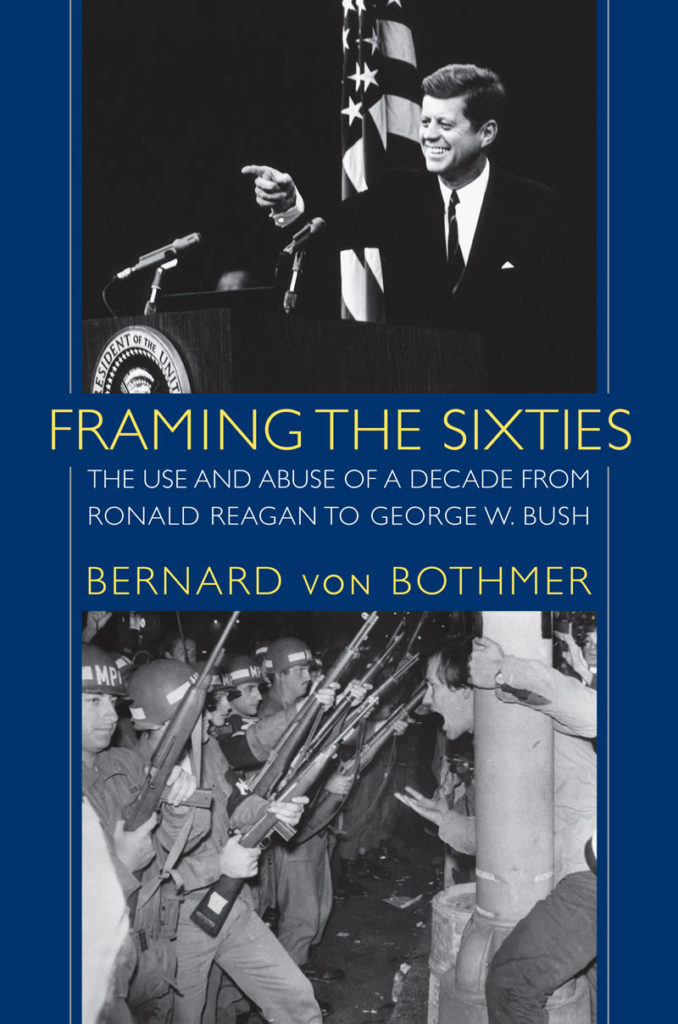
Think the 1960s are over? Find out what they're still doing to presidential politics.

Framing The Sxties by  Bernard von Bothmer

Video Book Trailer

The decade that gave us John F. Kennedy, Lyndon B. Johnson, the civil rights movement, Vietnam, and Woodstock has been used as a fulcrum in presidential politics—by both parties—ever since Ronald Reagan, a fierce critic of "the sixties," captured the presidency in 1980.

Every campaign that followed—including Obama's—has used the era to define itself to its own constituencies. What was best about the sixties for some people is what was worst about it for others. Of that, political contests are made.

Now, as no other historian has done, Bernard von Bothmer follows the trail of the 60s into the presidencies of the 80s, 90s, the 00s and up to the present in Framing the Sixties: The Use and Abuse of a Decade from Ronald Reagan to George W. Bush.
 

Video Book Trailer


Photo Tour

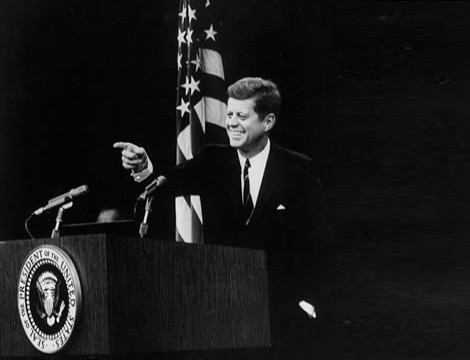
A New Era Begins

John F. Kennedy embodied a new spirit of vitality and hope, and although he did not participate in most of the sixties era, his ideals would later be embraced by all sides of the political spectrum. The time of JFK's presidency has come to symbolize the "good sixties," conjuring up images of a strong national defense, peaceful civil rights protests, and the persistence of "traditional" cultural standards left over from the fifties.

#000000

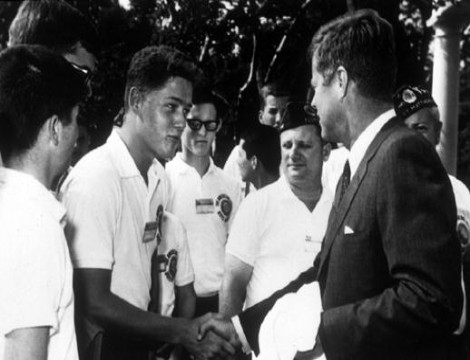
Clinton and JFK

This iconic photo of a young Bill Clinton meeting his hero was used repeatedly during the Clinton presidential campaign to establish his direct "lineage" to the ideals of the Kennedy era. A more powerful and providential picture in aiding Clinton's political fortunes could not have been stage-managed to such effect.

#000000

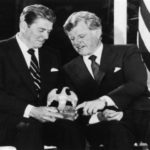
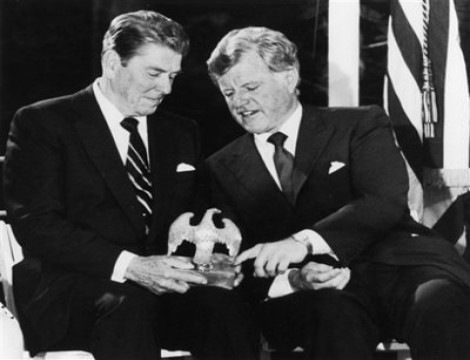
Reagan and the Kennedys

Athough he never supported JFK for president, Ronald Reagan made glowing references to him during his own presidency. This was an example of Reagan's showman-like ability to gauge and speak to the sentiments of a wider audience than his "base." He is shown here on a visit to the JFK Library with Ted Kennedy, with whom he remained publicly cordial despite their strong political differences.

#000000

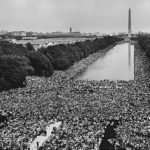
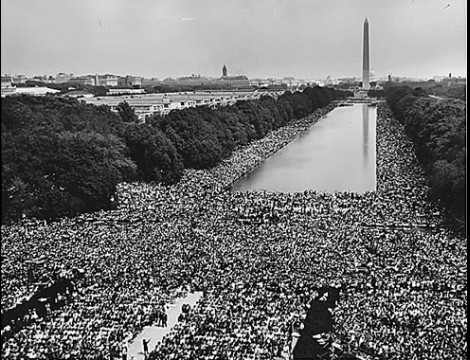
Martin Luther King

Martin Luther King spoke to over 200,000 civil rights supporters in Washington, DC, on August 28, 1963. This speech, containing the "I have a dream" passage, was a defining moment for the country. King was considered a subversive by the FBI, yet despite some opposition from the far right, and from Ronald Reagan, a national holiday in his honor was signed into law by Reagan in 1983.

#000000

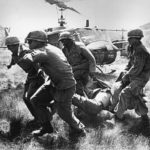
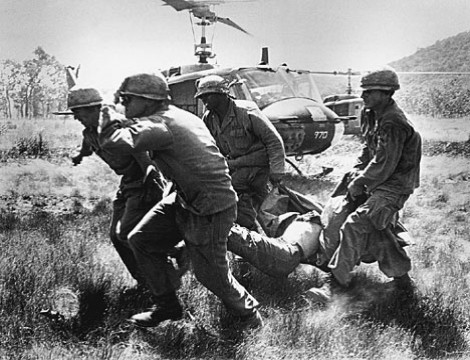
War in Vietnam

The shadow of the Vietnam War still hangs over today's political landscape. Reagan tried to elevate the public memory of the war to that of a valiant cause in his 1980s speeches. It was clear to him, at least, that the pain and divisiveness of that long war was best smoothed over with noble sentiments.

#000000

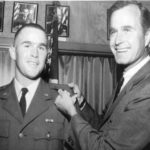
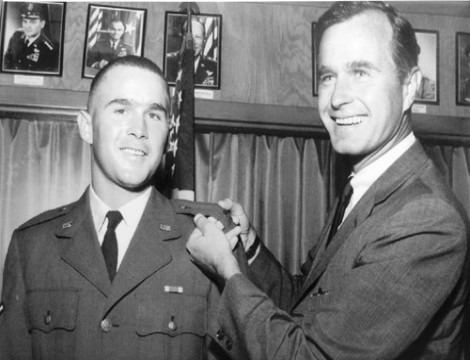
George W. Bush and George H. W. Bush

Both Bill Clinton and George W. Bush came of age in the sixties and neither served in Vietnam. Clinton's explicit avoidance of the draft was a badge of dishonor to his opponents, while Bush remained mostly unscathed. Many of the most hawkish post-sixties politicians on both sides of the aisle did not serve in the military, much less Vietnam.

#000000

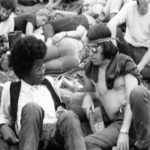
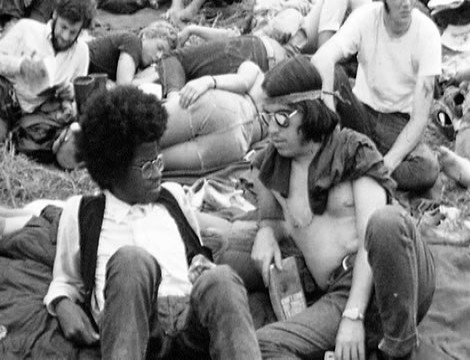
Woodstock Nation

The 1969 Woodstock festival became a touchstone in the 2008 presidential campaign as Republican candidate John McCain described it as a "cultural and pharmaceutical" event that he could not attend because he was "tied up" -- referring to his being a prisoner-of-war in North Vietnam at that time. His campaign repeatedly associated his Democratic opponent with 60's era anti-establishment values. Obama was just eight in 1969.

#000000

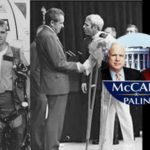
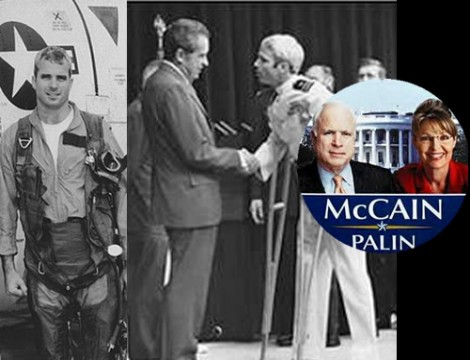
John McCain's Journey

John McCain's Sixties were emblemized in the now familiar arc of his life as a brash young Navy pilot, his capture and long imprisonment by the North Vietnamese and return to America as a wounded war hero. Despite the long senatorial career that followed, McCain's military service was the major cornerstone of his 2008 presidential bid.

#000000

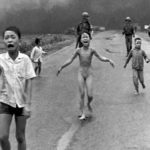
War's Realities

This Pulitzer-prize winning photograph of 9-year old Kim Phúc fleeing from a napalm bombing in 1972 brought home a reality in stark contrast to the view of the Vietnam War as a noble cause and the Americans (and their South Vietnamese partners) as the "good guys." But entrenched positions are not easily challenged, and Richard Nixon himself was caught on tape questioning the photo's authenticity because he could not accept its implications.

#000000

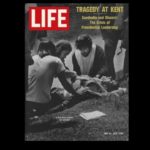
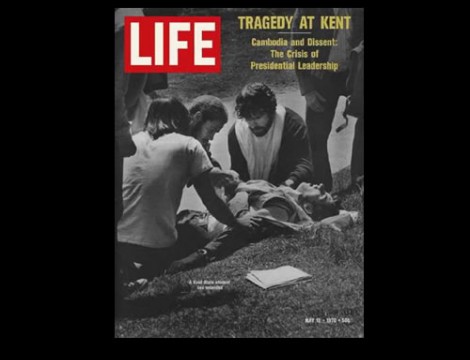
Four Dead in Ohio

A wave of nationwide student protests against the Vietnam War and Nixon's invasion of Cambodia came to a head at Kent State University in Ohio. On May 4, 1970, four unarmed young protesters were fatally shot by National Guardsmen called to the campus to contain the crowd. This photograph of one of the victims showed the world how polarized the country had become over the war.

#000000

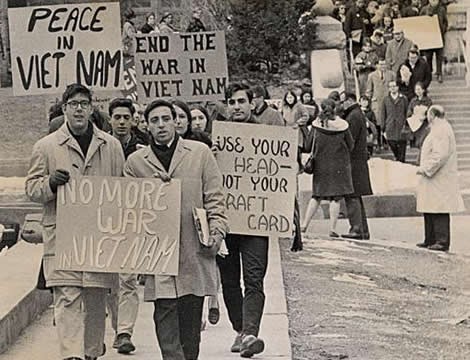
War Protesters

The rise of mass protests against the Vietnam War, beginning on major college campuses, was unprecedented in recent history, and has come to be a core symbol of the "bad sixties" as portrayed by the political Right. The backlash against images of the social upheaval and antiwar activism helped Republicans win seven of ten presidential elections from 1968 to 2004.

#000000

Kerry Invokes the Sixties

In the 2004 presidential election, Democrats fervently hoped that John Kerry's record of heroic service in Vietnam would give him authority in military matters and foreign policy that Clinton and George W. Bush lacked. But well-organized conservatives were able to promote Kerry's anti-war activities after he returned from decorated service in Vietnam, going so far as to even claim that his medals were false.

#000000
http://www.framingthesixties.com/components/com_gk2_photoslide/images/thumbm/414599jfk_pressconference470.jpg
http://www.framingthesixties.com/components/com_gk2_photoslide/images/thumbm/991742Clinton_and_JFK.jpg
http://www.framingthesixties.com/components/com_gk2_photoslide/images/thumbm/474786Kennedy_and_Reagan_1985__at_JFK_Library.jpg
http://www.framingthesixties.com/components/com_gk2_photoslide/images/thumbm/673590march_on_washington.jpg
http://www.framingthesixties.com/components/com_gk2_photoslide/images/thumbm/619516vietnam_war.jpg
http://www.framingthesixties.com/components/com_gk2_photoslide/images/thumbm/824484Bush_and_son_1968.jpg
http://www.framingthesixties.com/components/com_gk2_photoslide/images/thumbm/435888woodstock.jpg
http://www.framingthesixties.com/components/com_gk2_photoslide/images/thumbm/412552john_mccain.jpg
http://www.framingthesixties.com/components/com_gk2_photoslide/images/thumbm/697260vietname_napalm_photo.jpg
http://www.framingthesixties.com/components/com_gk2_photoslide/images/thumbm/206049kent_state_tragedy.jpg
http://www.framingthesixties.com/components/com_gk2_photoslide/images/thumbm/891364student_war_protest.jpg
http://www.framingthesixties.com/components/com_gk2_photoslide/images/thumbm/181129john_kerry.jpg
thumbnailthumbnailthumbnailthumbnailthumbnailthumbnailthumbnailthumbnailthumbnailthumbnailthumbnailthumbnail
"Framing the Sixties is a smart, important and impressively researched account of the decade that far too often is reduced to cliches by the left and the right. This book will be invaluable to anyone eager to know the real story behind the political and cultural consequences of that tumultuous time."
Tom Brokaw
Author of Boom! Talking About the Sixties

"No decade of recent U.S. history has been mythologized like the Sixties. Historian Bernard von Bothmer has done a marvelous job of setting the historical record straight in Framing the Sixties. Instead of relying on staid orthodoxy von Bothmer analyzes the spin factor irresponsibly promulgated by both right and left. A truly important and essential study."
Douglas Brinkley
Author of Tour of Duty: John Kerry and the Vietnam War and professor of history, Rice University

"The Sixties: Ronald Reagan cherry-picked what he wanted and used the rest as a reason to oppose government; George H. W. Bush condensed them into the 'Vietnam Syndrome' that he used for another war; Bill Clinton ran parallel to the decade for political safety; George W. Bush twisted the sixties to defeat one of its iconic figures, John Kerry. These framings, richly sourced for us with interviews with high-level Republicans and Democrats and speeches archived in presidential libraries, will be the crown jewel in syllabi for sixties courses."
Jerry Lembcke
Author of Hanoi Jane: War, Sex, and Fantasies of Betrayal
and professor of sociology, College of the Holy Cross

"This fine book illustrates the truth of the maxim that history is what the present wants to know about the past. To understand why the meaning of the 1960s remains a critical matter for both conservatives and liberals, Bernard von Bothmer’s careful study is the place to start."
Michael Kazin
Co-author, America Divided: The Civil War of the 1960s and professor of history, Georgetown University

Find us on Facebook